
Residential system architecture
Low-Voltage vs High-Voltage Home Batteries
Understand the practical differences between low-voltage and high-voltage home battery systems before comparing models, inverters, current, installation and expansion.
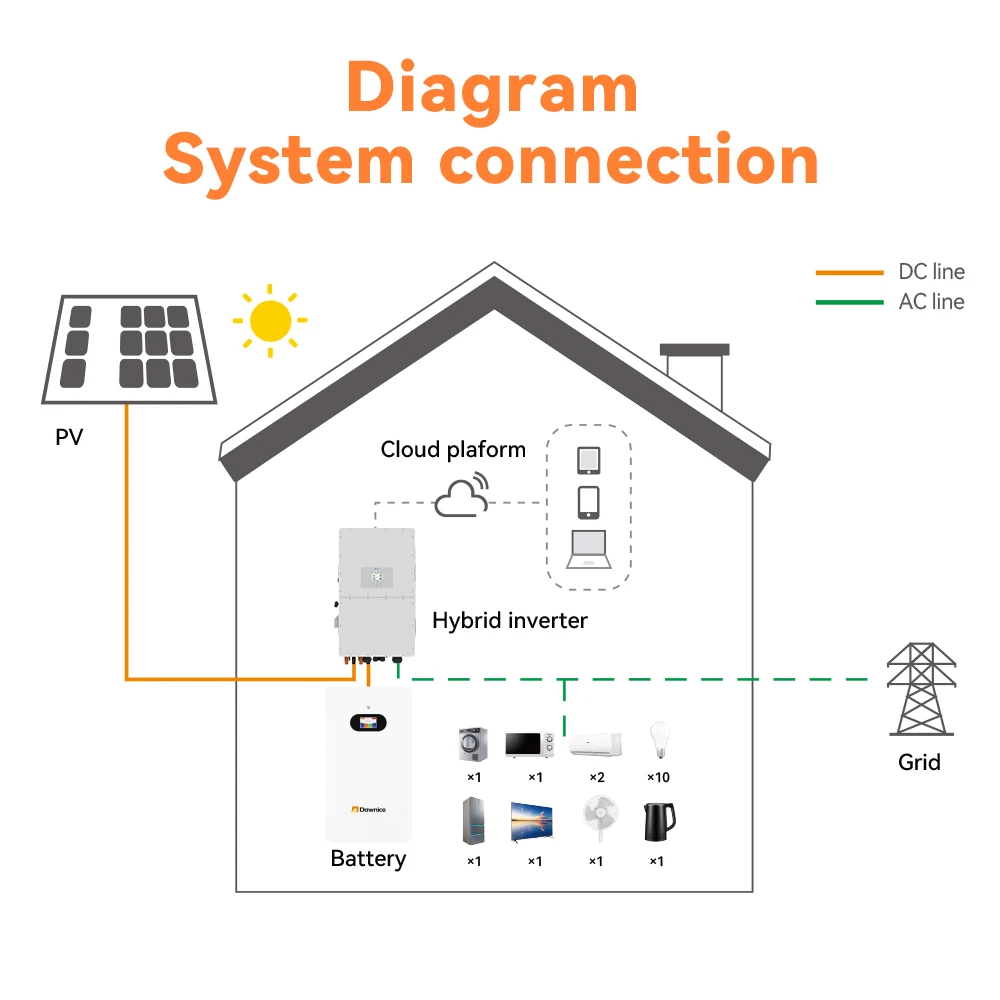
Low-voltage and high-voltage batteries can both support residential solar storage, but they use different electrical architectures. The correct choice follows the inverter, current, power, expansion and installation design.
What low voltage and high voltage mean
Residential low-voltage batteries commonly operate around a 48 V class platform. High-voltage systems connect modules in series to reach a substantially higher DC voltage. Product naming alone is not enough; always review the actual operating range.
Current, cabling and power conversion
For the same power, a lower-voltage system generally carries more current than a higher-voltage system. This affects conductor sizing, protection, connectors and inverter design. A high-voltage architecture may reduce current, but requires components and procedures designed for that voltage class.
Expansion and compatibility
Low-voltage product families can offer familiar parallel expansion, while high-voltage systems often require a defined number and sequence of series-connected modules. In both cases, the approved BMS, inverter communication and firmware are essential.
The TT-LCT residential family is a documented 51.2 V platform with four capacities and up to 15 parallel units. Review its online table on the Residential Energy Storage page.
Questions to ask before ordering
Confirm nominal and operating voltage, maximum current, inverter compatibility, parallel or series rules, communication, usable energy, installation environment, protection, service access, warranty and destination-market evidence.
Frequently asked questions
Low-Voltage and High-Voltage Battery FAQ
Is high voltage always more efficient?
System efficiency depends on the complete battery, inverter, operating point, cabling and control design. Voltage class alone does not determine total efficiency.
Can a low-voltage battery use a high-voltage inverter?
Only if the inverter is specifically designed and approved for that battery voltage range and communication. Most products require matching voltage architectures.
Which architecture is easier to expand?
Expansion rules vary. Low-voltage systems may use parallel batteries, while high-voltage systems may add modules in a controlled series configuration. Follow the exact product instructions.
Next step
Request Model-Specific Information
Share your market, intended application, inverter, target capacity and expected quantity for a focused response.